
Do You Need A Technical Co-Founder?

In my career, I've sat on every side of the startup table. I’ve been the first engineer, head of engineering, and technical co-founder. Now, I spend time helping founders navigate their earliest, most critical decisions. From every vantage point, I’ve seen one issue derail more promising companies than any other: a flawed early technical hire.
I know the pain of this mistake all too well, both as an advisor who helps fix it and, to be perfectly honest, as someone who’s made these errors himself in the past. It’s one of the costliest and trickiest mistakes to fix. It forces non-technical founders into a daily battle, haplessly trying to wrangle the team in the right direction until they eventually need to rip the bandaid off in a messy and painful ordeal.
The ideal founding story is a powerful myth: two good friends, one who can build and one who can sell, trusting each other implicitly. This ideal exists for a reason, as that built-in trust is a massive advantage. For most founders, however, reality is rarely so neat. They’re forced into a desperate search in a lopsided talent market where great technical leaders suited for early-stage startups are exceptionally rare. This intense pressure forces founders, who are often ill-equipped to vet technical strategy, to make a foundational decision under the worst possible circumstances.
This pressure-cooker environment typically leads down one of two flawed paths. The first is to settle for the first available partner, even if the fit is poor. The second, born of frustration, is to abandon the search entirely and outsource development to some overseas contractors. While the latter seems safer, it’s often just trading one set of risks for another, as the core inability to vet technical work remains.
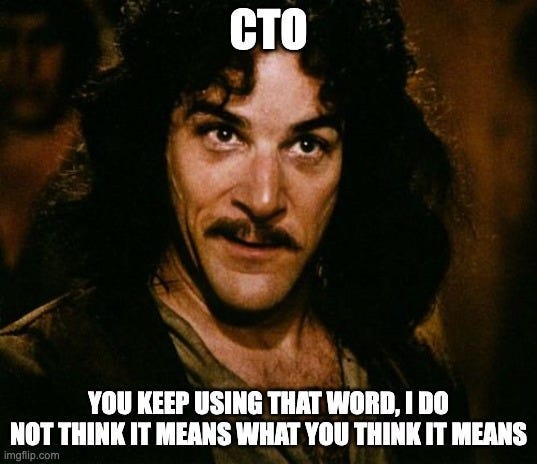
However, the real issue is deeper than a difficult search. It's a systemic misunderstanding of the technical co-founder role itself. We reduce the complex, strategic job of a co-founder to a simplistic question: "can they code?" We fail to give non-technical founders a realistic playbook for this crucial partnership, and we fail to give technical leaders a clear blueprint for what greatness in the role actually requires.
This article aims to provide that blueprint. It’s a playbook for both sides of the table: for the non-technical founder who needs to navigate this difficult landscape, and for the talented technical leader who wants to understand what it truly means to be a great co-founder.
Vetting Technical Co-Founders
Outside of building something nobody wants, the single greatest predictor of a startup's demise is having a dysfunctional team, particularly the founding team. When it comes to non-technical founder partnering with a technical one without an existing personal foundation, this risk is exacerbated. The natural information asymmetry between the two roles is a fertile ground for misunderstanding, mistrust, and a complete breakdown in execution. Vetting for the right person is critical and often the most difficult for a non-technical founder.
To de-risk, we must first move beyond the vague, desperate search for "someone who can code” and “someone I can get along with.” Trust and fit are certainly important, each founder will have their own particular approach to the nebulous trust exercise, but beyond that you need to elevate the conversation by clearly defining the roles you will each play and the expectations you’ll have of each other.
Defining The Job
Roughly speaking, I define the roles and responsibilities as this:
As CEO, the non-technical co-founder, you own:
Fundraising: don’t let us run out of money and die
Marketing/Sales: get the product into customers’ hands
Product (shared): vision, strategy, voice of the customer
Hiring (shared): sell and close, foster strong culture
As CTO, the technical co-founder, you own:
Building: turn ideas into working product
Product (shared): customer obsession, deliver magic
Hiring (shared): sell and close, foster strong culture
What you see here is a very intentional definition that I believe is best suited for an early stage startup that’s still trying building towards PMF. You’re not simply looking for a technologist (someone who can crank out beautiful code and systems yet fails to make smart tradeoffs) or a professional manager (someone who thrives in large orgs yet crumbles when getting their hands dirty) but rather someone who can ship amazing products and hire a scrappy founding team of engineers with few resources.
Testing out this definition is an easy litmus of what failure looks like:
Building: It would be a disaster to have a technical co-founder who struggled to build the right things and quickly. You will die if the engineering team is slow and/or going in the wrong direction. A good leader would know to make shit happen with few resources (i.e. scrappy).
Product: You will continually battle a technical co-founder who doesn’t understand customers. They might be prioritizing technical requirements when they should be looking at customer feedback. A good leader can cut through the distractions and deliver products customers love.
Hiring: A leader who can’t hire in a startup environment, where you can’t offer stability or Google-sized comp, will be dead in their tracks. A good leader will know how to pitch and sell to scrappy engineers excited about the startup’s mission and thrive on the chaos and potential upside.
The Rubric
Turning this into a comprehensive vetting process can be difficult–there’s so much involved in finding the perfect technical co-founder–but prioritizing some key questions around these buckets will ensure you avoid the most egregious mistakes:
Building: Can they build stuff scrappily and quickly?
What have they built before? Does it transfer well to what we need to build?
Do they exhibit a track record of successfully shipping and with high velocity? Do they make good tradeoffs?
How do they organize teams to execute? What are their preferred tools and rituals?
Product: Do they obsess over customers?
How well have they partnered with product teams in the past? How many references would choose them as co-founders?
How do they figure out what customers want? How strong is their analytics acumen?
How well did they know their customers in previous roles and products they’ve built?
Hiring: Can they hire a great team?
How hands-on are they at recruiting? How many interviews have they conducted? How many offers extended? How well do they pitch?
What do they look for when they hire? What does great look like to them? What type of people do they surround themselves with?
What kind of team culture do they develop? What qualities and behaviors matter most?
Far from a simple checklist, this is a foundation for a series of deep, substantive conversations. The goal isn’t to find a mythical candidate who’s a perfect ten across all three areas. No one is. The purpose of this rigorous process is to replace blind hope with a clear-eyed assessment. It allows you to go into one of the most important business relationships of your life with a full understanding of your partner’s strengths and, just as importantly, their weaknesses. It gives you the data you need to make a truly informed decision.
You’re probably thinking right now, “Sounds great, KT, but I can’t even find enough potential co-founders let alone vet them.” You’d be right; there are significantly more non-technical co-founders than good technical co-founders. So, what then?
Going Solo as Non-Technical Founder
The most courageous and often wisest decision a non-technical founder can make is to walk away from a bad co-founder fit, regardless of how desperate the situation is. While having a good one is ideal, never settle for someone who doesn’t meet your bar. Having a bad technical co-founder can be far worse than not having one at all. While both paths have challenges, the latter at least preserves your equity and sanity.
The Leadership Layer
In the absence of that technical co-founder, you need to first fill the leadership gap. The first step is to bring in a trusted partner to sit on your side of the table and bridge the information asymmetry gap. This person is your guide and your expert, ensuring that technical decisions are sound and aligned with business goals.
Unlike the search for a co-founder, the pool of potential candidates is paradoxically much larger and more experienced. You are not asking for a full-time, life-altering commitment. Instead, you are offering a high-impact, part-time engagement, which attracts seasoned experts who are no longer interested in the 100-hour-week grind but are still passionate about building new things.
This partner can come in a few forms:
Fractional CTO
Technical advisor (who is heavily leaned in)
Venture studio
The Fractional CTO
This is a part-time executive who brings the experience of a seasoned technology leader to your startup. A good fractional CTO (fCTO) does more than just advise; they are effectively your CTO but work in very high-leverage ways so as to be more time efficient. Having seen this all before, they can easily pattern match to quickly give you the solutions you need.
Expect them to be heavily involved early on, getting to deeply know you and your vision so they can bring the solutions that fit your needs. They should help you with setting key engineering decisions to get going, hiring the first few engineers, and setting up the processes to keep the train on the tracks. Eventually, things will hum along and they’ll have groomed a team lead who can take the steering wheel while they dial back to a lighter engagement much like an advisor or board member. Good fCTOs will then help you find their replacement, a permanent CTO who cost less equity because they’re handed a fully functioning team ready to go.
Every fCTO works differently, but I would expect two primary configurations: one more mercenary (pay cash for expertise) and one more missionary (give equity for expertise). I don’t think there’s a right or wrong way, but my sense is to lean more to the latter, because I believe someone who is sold enough on your vision to take equity would likely go the extra mile for you.
The Technical Advisor(s)
A technical advisor is a step further removed from day-to-day operations than a fCTO, but can be just as valuable. If a fCTO provides hands-on strategic management, a great advisor provides strategic governance. For maximum impact, consider assembling a small bench of advisors who can work together to guide you, keeping close tabs on the team and the business.
Unlike typical advisors who exist mostly for signal or can only spend an hour a month with you, these advisors would be able to go deep when needed. They would be integrated with the team to the extent that they have sufficient context to give you great advice on the spot. They should be tagged on all key engineering technical decisions and major new developments. Most importantly, they should occupy a slot in your interview process, particularly for senior hires.
I would almost think of them as having a bench of principle engineers who oversee and empower the team with their knowledge and wisdom. And like typical advisors, I would expect these technical advisors to be equity-oriented, aligning them with the team’s long term success.
The Venture Studio
The third alternative is the most operationally integrated and much more than just an alternative to a technical co-founder: partnering with a venture studio. If a fCTO is a part-time leader, a venture studio acts as a full-stack institutional co-founder. This model is designed to solve the execution problem entirely by providing a pre-built, experienced team from day one.
For a non-technical founder, the value proposition is clear and immediate. You bring the industry expertise and customer vision, and the studio provides a "founding team in a box" consisting of vetted engineers, designers, product managers, and marketers. This allows you to bypass the individual hiring process entirely and plug directly into a machine built for speed.
This speed, however, comes with a significant and non-negotiable trade-off: equity. A venture studio is not a vendor; it’s a co-founder that takes a substantial ownership stake in the business, often ranging from 30% to 70%. In this model, you are trading a large portion of your company for a massive reduction in execution risk and access to a proven company-building playbook.
This path is best suited for founders who value speed and de-risking above all else and are comfortable giving up a significant degree of control and ownership to get their vision to market. It is a powerful accelerator, but it requires you to be clear-eyed about the high price of that acceleration.
The Execution Layer
If you’ve established your leadership layer with a fCTO or advisory bench, you have solved for strategy but not for day-to-day execution. You are still missing the most essential piece: someone to write the actual code and build your product. While you could ask your part-time leaders to code, it's a poor use of their strategic experience. Their highest-leverage initial deliverable is to help you hire your Founding Engineer.
This is a critical hire you must be deeply involved in. The good news is that the search is much more manageable than finding a co-founder (you might’ve actually already found them in that process), and you now have seasoned experts to guide the process.
Hiring them is a partnership with a clear division of focus. Your leadership will own the technical assessment; they define the required skills and run the vetting process to ensure engineering excellence. Your job, as the founder and CEO, is to be relentlessly opinionated about one thing above all else: culture.
While your advisors influence high-level strategy, it’s the Founding Engineer who will be in the trenches every day. Their mindset, their work ethic, and their values will permeate the entire engineering team you eventually build. Let your leadership team design the technical hiring profile, but you MUST be specific about the values and behaviors this person embodies. Use this as your leverage to design the team you want through culture, while your leadership ensures they have the technicals to get the job done.
Conclusion
Navigating the technical challenges of a startup is often the single greatest point of failure for a non-technical founder. The conventional wisdom pushes you into a desperate search for a co-founder, a path that too often ends in a weak partnership that costs you critical equity, time, and morale.
This playbook was designed to offer a different path. It begins with a fundamental shift in mindset: moving from the vague search for a "coder" to a rigorous assessment of a true partner's capabilities. The litmus test is simple but powerful. A great technical leader must be able to build the product, partner in shaping the product strategy, and hire a team to scale it out.
Armed with this clear definition, you are empowered to make a strategic choice. You can either conduct a clear-eyed search for a co-founder who truly meets this high bar, understanding both their strengths and weaknesses from day one. Or, you can choose a different path entirely, unbundling the role by pairing world-class part-time leadership with a dedicated first hire or an institutional partner.
Ultimately, your success won’t be determined by your ability to find a mythical unicorn. It’ll be determined by your courage to walk away from bad deals and your clarity in defining what you truly need. For the non-technical founder, this means becoming a savvy leader who can confidently build a technical team. For the technical leader, it is a call to rise beyond the codebase and become the strategic business partner a startup truly requires. By holding both sides to a higher standard, we can transform the most common source of failure into your greatest source of strength.